Decision trees are one of the most intuitive and easy to understand machine learning algorithms that work exactly like how we make decisions in real life. Think of them like flowcharts that help computers make smart choices by asking a series of yes/no questions.
What is a Decision Tree?
A decision tree is a tree-like structure that helps solve problems by breaking them down into smaller, simpler decisions. Just like a real tree, it has:
- Root Node: The starting point where we ask the first question
- Internal Nodes: Points where we ask more questions
- Branches: The different paths based on our answers
- Leaf Nodes: The final answers or decisions
How Decision Trees Work
Let’s use a simple example that any student can understand. Imagine you’re deciding what activity to do on the weekend :
- First Question (Root): “Is it sunny outside?”
- If YES → Go to next question
- If NO → “Stay inside and play video games”
- Second Question: “Do I have homework?”
- If YES → “Do homework first, then go swimming”
- If NO → “Go to the park”
This step-by-step questioning process is exactly how decision trees work in computers.
Decision Trees in Cyber security
Decision trees are powerful tools in cyber security, helping protect us from digital threats. Here’s how they’re used:
Malware Detection
When you download a file, security software uses decision trees to check if it’s safe. The system asks questions like:
- “Does this file try to access sensitive system areas?”
- “Is it from a trusted source?”
- “Does it show suspicious behavior patterns?”
Based on these answers, it decides whether the file is malware (bad) or safe.
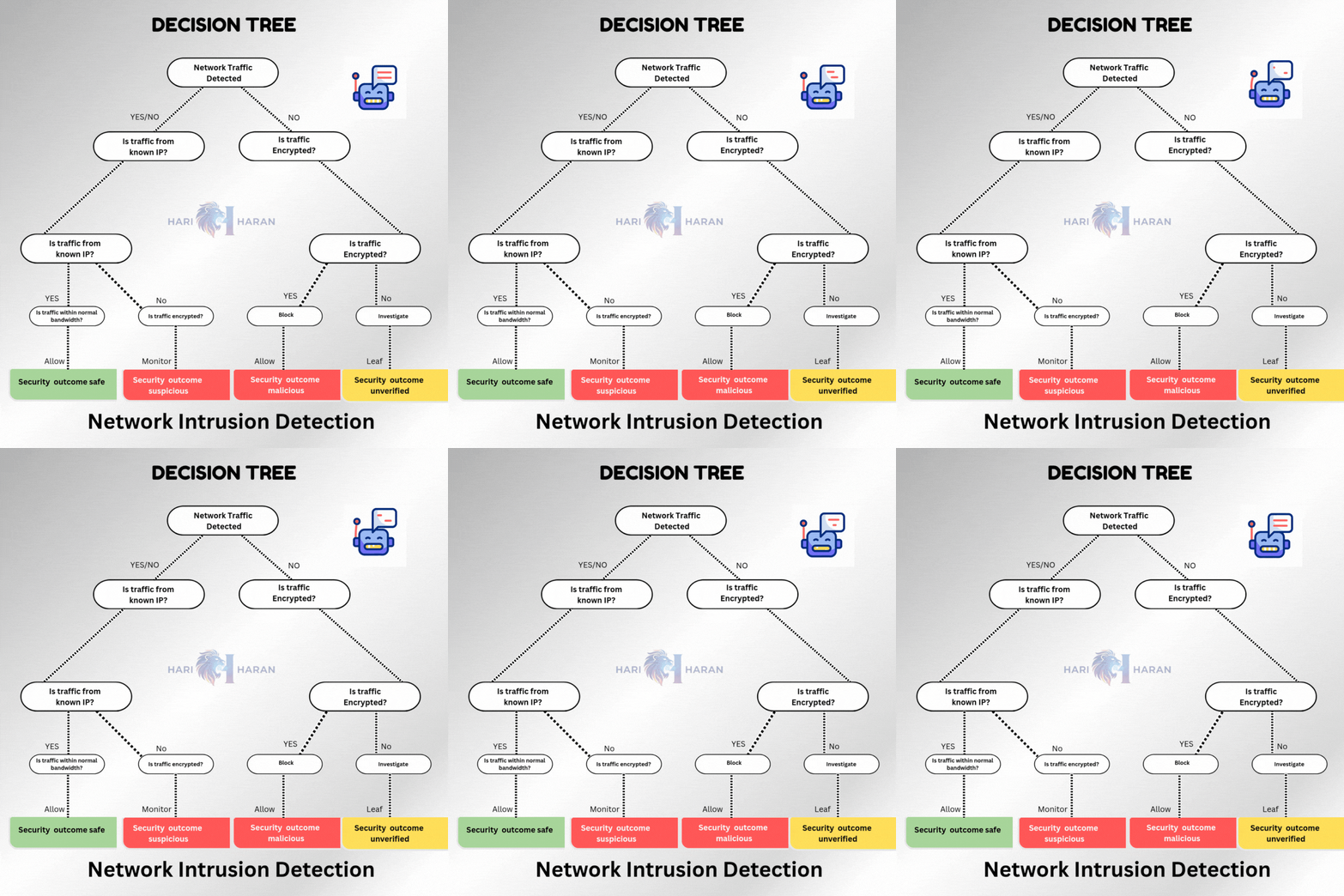
Network Intrusion Detection
Decision trees help detect hackers trying to break into computer networks. They analyze network traffic by asking:
- “Is this traffic coming from an unusual location?”
- “Are there too many login attempts?”
- “Is someone trying to access restricted areas?”
This helps security teams identify and stop cyber attacks before they cause damage.

haricodehunter@gmail.com
DevSecOps Engineer, AI/ML enthusiast, and technology blogger.