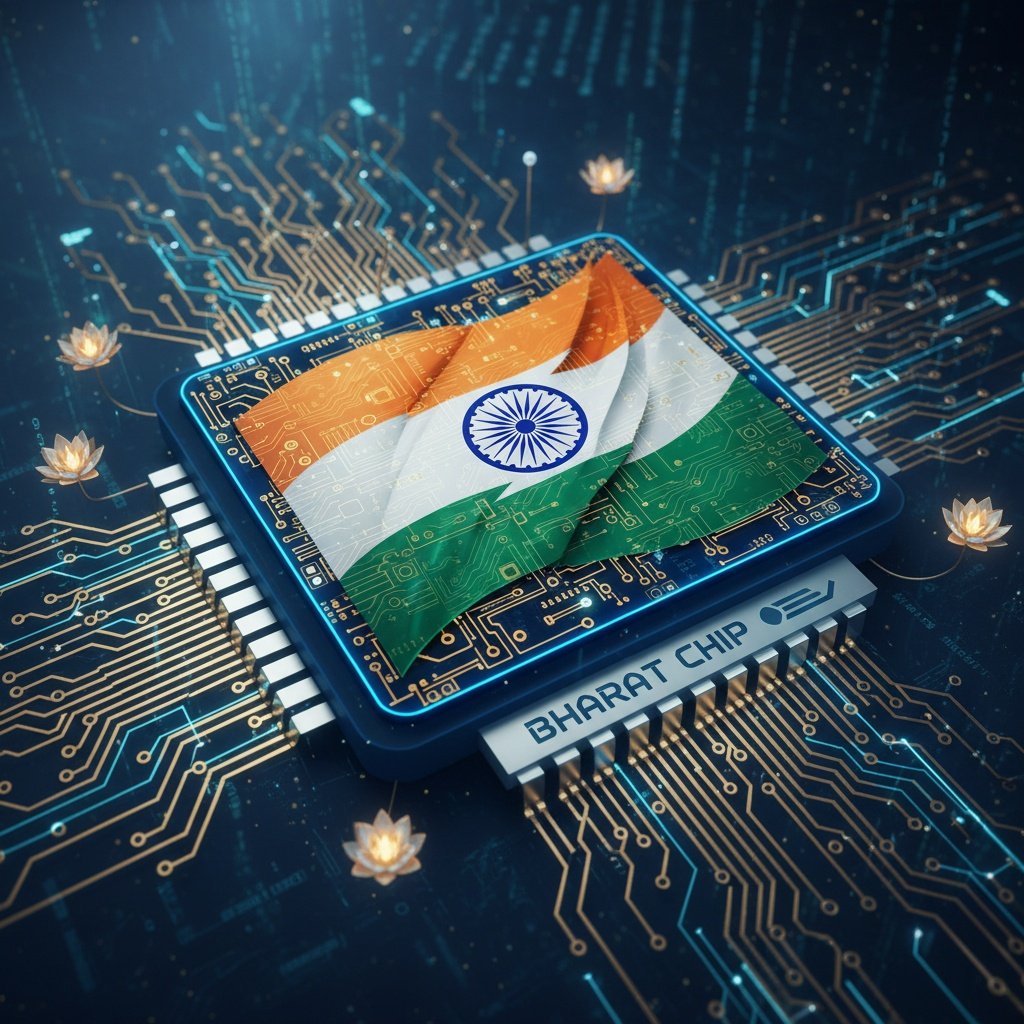
India has officially entered the elite club of semiconductor-producing nations with a groundbreaking achievement that promises to transform everything from space missions to the smartphones in our pockets. The country’s first Made-in-India chip has arrived, marking a historic shift from being a semiconductor consumer to becoming a manufacturing powerhouse.
The Breakthrough That Made Headlines In September 2025, India showcased its technological prowess at Semicon India 2025 with the unveiling of the Vikram 32-bit processor. Developed by ISRO’s Semiconductor Laboratory in collaboration with the Vikram Sarabhai Space Centre, this isn’t just another chip—it’s a testament to India’s growing technological independence.
This space-grade processor succeeds the VIKRAM1601, which has been powering ISRO’s launch vehicles since 2009. But what makes this achievement truly remarkable is its potential to revolutionize multiple sectors beyond space exploration.
Beyond Rockets: Where These Chips Will Transform Your Life
Your Smartphone and Electronics – India’s domestic electronics market, currently worth $150 billion, is projected to reach $500 billion by 2030. With over 90% of electronic goods requiring semiconductor chips, homegrown production means:
- More affordable smartphones and gadgets
- Better availability during global supply chain disruptions
- Enhanced security for sensitive personal data
- Electric Vehicles and Clean Energy
- The development includes Silicon Carbide (SiC) semiconductors specifically designed for:
Electric vehicle power systems
- Renewable energy infrastructure
- Advanced automotive solutions
- Banking and Digital Services
Indigenous chips provide enhanced security for digital payment systems, online banking, and government services that millions of Indians use daily.
The Economic Game-Changer
The numbers tell an impressive story of transformation:
20,000 high-tech jobs expected directly, with 60,000 additional positions across supporting sectors
15-30% more cost-competitive production compared to global benchmarks
₹ 90 billion government commitment through the India Semiconductor Mission
Ten major projects worth ₹1.6 lakh crore approved across six states
From Pilot to Production: What’s Coming Next
India’s first domestically produced chips using 28 to 90 nanometer technology are set to hit the market by the end of 2025. While not as advanced as Taiwan’s cutting-edge 3nm chips, these represent a crucial foundation for India’s semiconductor ecosystem.
The country’s first Outsourced Semiconductor Assembly and Test (OSAT) facility in Sanand, Gujarat, launched in August 2025, with companies like CG-Semi expected to roll out commercial chips soon.
Major Players Joining the Revolution
Several international and domestic companies are betting big on India:
Tata Electronics: Investing ₹1.18 lakh crore across Gujarat and Assam facilities
Micron Technology: $2.7 billion investment in Gujarat
Tower Semiconductor & Adani Group: $10 billion joint venture
Foxconn & HCL: New display driver chip facility near Delhi
Why This Matters to Every Indian
National Security Benefits
- Domestic semiconductor production reduces dependence on foreign suppliers, ensuring critical infrastructure remains secure and operational even during global tensions.
Price Impact - As local production scales up, the cost advantages will translate into more affordable:
- Medical devices and healthcare equipment
- Home appliances and consumer electronics
- Educational technology and digital tools
- Innovation Hub
With over 100 semiconductor startups already operating in India, the ecosystem is fostering innovation tailored to local needs while building global competitiveness.
Challenges and Realistic Expectations
India’s semiconductor journey represents more than technological achievement—it’s about economic independence, job creation, and building a foundation for future innovations in AI, IoT, and emerging technologies.
As the country moves from design contributor to manufacturing hub, the impact will be felt in every sector of the economy. From the farmer using smart agricultural tools to the student accessing digital education, India’s homegrown chips promise to power a more self-reliant and technologically advanced nation.
The semiconductor revolution has begun, and for the first time, it’s truly “Made in India.”

haricodehunter@gmail.com
DevSecOps Engineer, AI/ML enthusiast, and technology blogger.